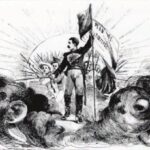
Porfirio Díaz wanted to be president of Mexico but lost the 1871 elections against Benito Juárez, who would govern for the fourth time. Díaz opposed the re-election of Juarez and proclaimed in 1872 the Plan de la Noria where he demanded free elections and no re-election. His plan failed.
After the death of Juárez (heart attack) in July 1872, Sebastián Lerdo de Tejada remains as interim president and calls for new elections. Porfirio Diaz launches himself again as candidate but loses the 1872 elections against Sebastián Lerdo de Tejada.
Sebastián Lerdo de Tejada wanted to be re-elected for the 1876 elections. This represented a new opportunity for Porfirio Díaz to oppose re-election.
In San Lucas Ojitlán, Porfirio Diaz declared the Plan of Tuxtepec on January 10, 1876, which sought to dismiss Sebastián Lerdo de Tejada and thereby proclaiming the principle of no re-election. Five days later, on January 15, 1876, the Plan of Tuxtepec was signed at the Buenavista Hotel in the city of Tuxtepec. Currently there is a plate that commemorates this event and you can visit it on Av. Independencia corner with Rayón, the hotel no longer exists but instead you will find the Banamex bank.
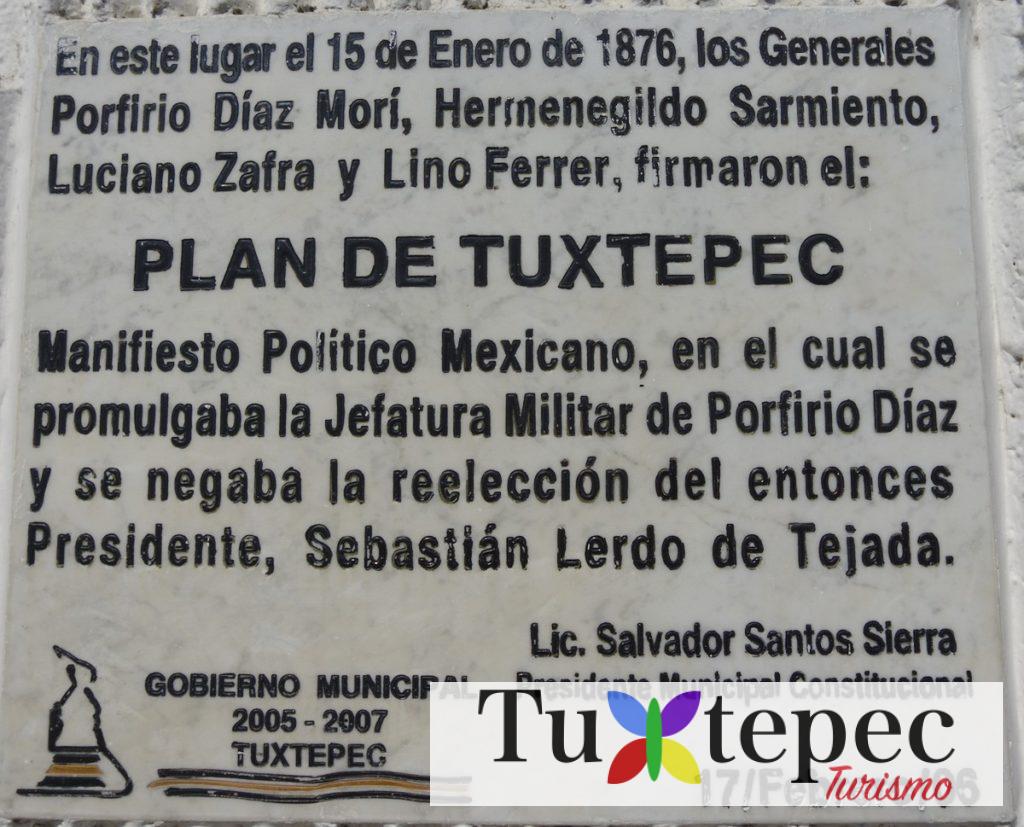
On this occasion Díaz’s plan worked and the re-election in 1876 of Sebastián Lerdo de Tejada was considered illegal. A new interim president was appointed and called for elections in 1877. Porfirio Díaz would be the only candidate and became president of Mexico in May of that same year.
Ironically, Porfirio Diaz was re-elected multiple times, converting Mexico into a dictatorship. This period of more than 30 years was known as the Porfiriato. In this period, the Chinantla region, but especially the Valle Nacional, would be known as the Death Valley because of the slavery on the tobacco haciendas and by the prisons for political prisoners.